
News
Facial hair and respiratory protection: why being clean-shaven is sometimes really necessary
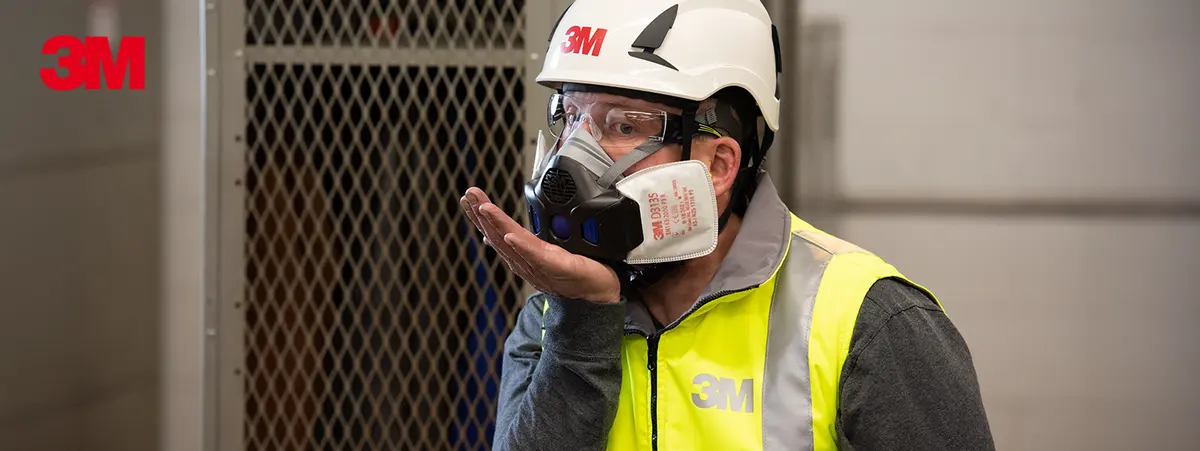
When wearing respiratory masks in work environments where protection against harmful particles, gases or vapours is vital, one issue plays a more crucial role than one might think: facial hair. It may seem like a minor detail, but it can mean the difference between complete protection and unintended exposure.
The influence of facial hair on sealing and protection
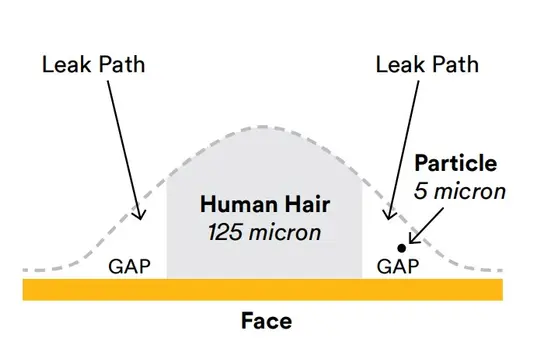
Close-fitting respirators, such as dust masks and reusable masks, are designed to form a perfect seal with the face. When gaps appear – for example, due to stubble, a beard or even long hair that ends up under the mask – contaminated air can enter through these gaps. The filters in the mask cannot clean the air that leaks past the seal, exposing the wearer to hazardous substances. Studies confirm this: even a day or two of stubble can lead to measurable leakage and a significant reduction in protection.
When are you actually “clean-shaven”?
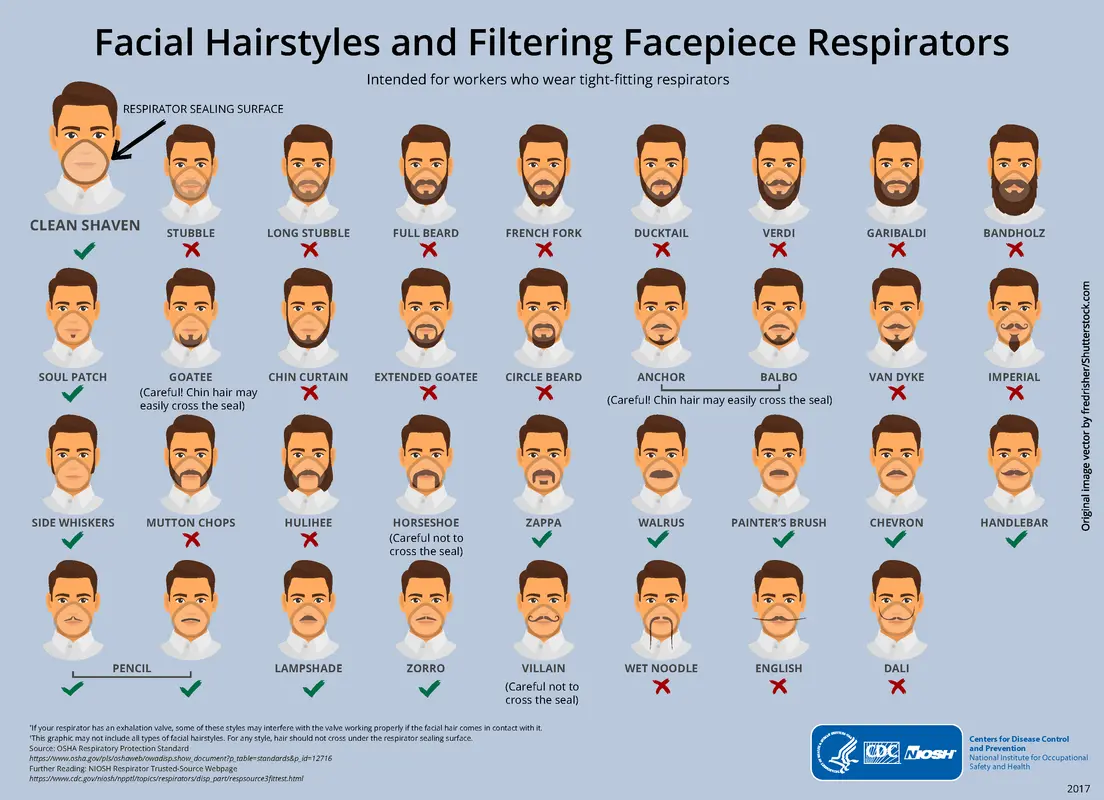
Strikingly, there is no exact definition of “clean-shaven”. Everyone shaves differently and every face is different. However, as a practical guideline, if stubble is visible above the skin, the person is not clean-shaven. The European standard EN 529:2005 provides a time-based definition: not shaving within eight hours prior to duty is considered “unshaven”. The National Institute for Occupational Safety and Health (NIOSH) has also created an infographic on which facial hair is suitable for a tight-fitting half-face mask or full-face mask with filter* to assist with implementation.
*May be suitable, but must be assessed on an individual basis to determine whether it may interfere with the face seal.
Why a clean-shaven policy is important
For employers, ensuring safety is their top priority. This often means introducing a clean-shaven policy for employees who wear tight-fitting respirators. However, this is a sensitive issue. Not everyone can or wants to shave. Personal preferences, religious beliefs and medical reasons can lead to exceptions or resistance. Effective policy requires understanding and communication. Employees need to know why clean shaven faces are necessary and what the risks are if this is not done.
Training on the correct use of masks, clear documentation and transparent enforcement contribute to support and safety.
Alternatives to tight-fitting masks
For those who cannot or do not want to be clean-shaven, there are solutions. Loose-fitting face masks and hoods do not require a seal with the face, but still offer high-quality protection through a constant supply of filtered air. Although these systems – such as the 3M™ Versaflo™ Powered and supplied air systems – have higher initial costs, they often provide greater comfort, consistency and ease of use in the long term.
- Click here to view these solutions
- Click here to visit the 3M website to read more about fit and fit testing.
- Click here to download the white paper on effective fit testing.